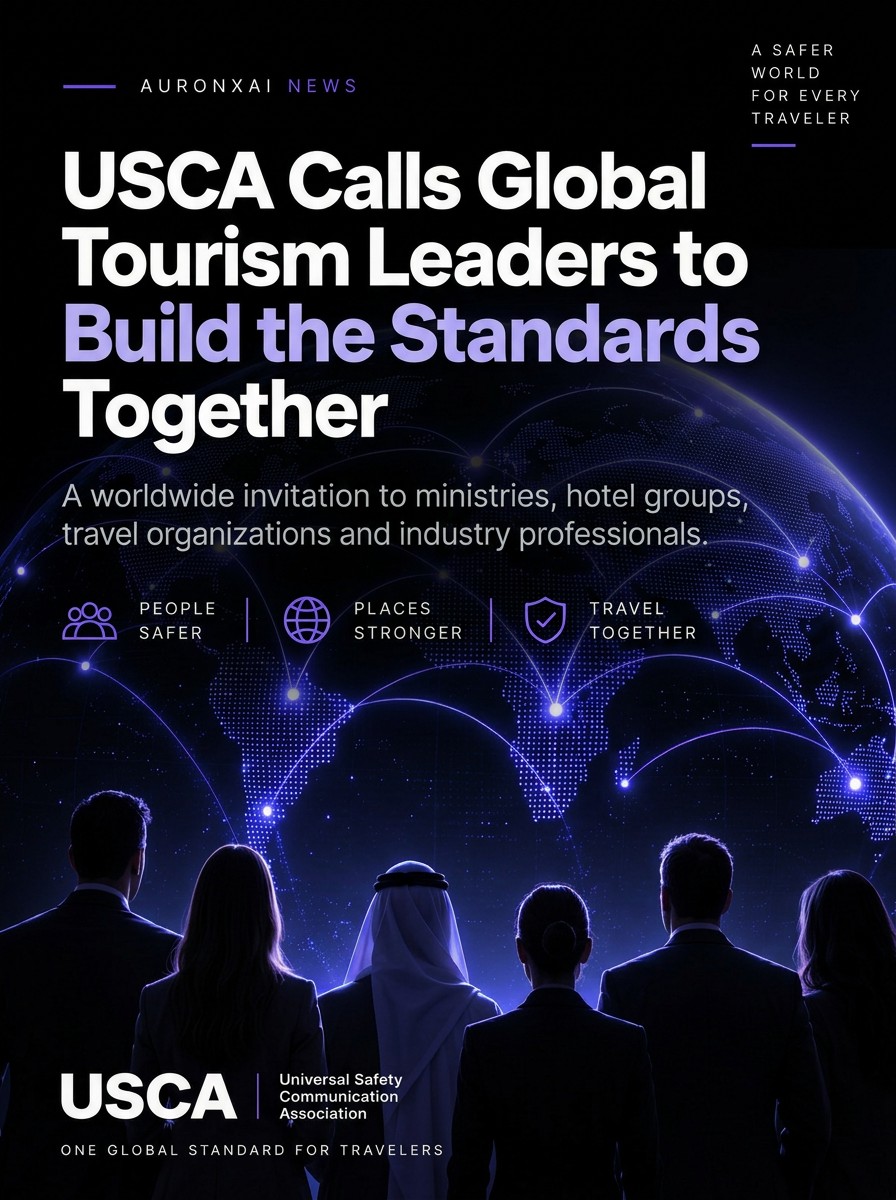
A worldwide invitation to tourism ministries, hotel groups, travel organizations, healthcare authorities and industry professionals to help shape a universal emergency communication standard for travelers.
The Universal Safety Communication Association (USCA) has issued a global call to tourism sector representatives around the world to participate in the development of a common safety and emergency communication standard for international travelers.
Every year, millions of people travel to countries where they may not know the local language, emergency numbers, healthcare procedures or the correct channels to reach public authorities. In a critical situation, even a few minutes of confusion can make a significant difference.
USCA believes that international tourism needs a simple and universally understandable framework that helps travelers know where to go, whom to contact and how to communicate during an emergency — regardless of the country they are visiting.
One World. One Common Safety Language.
USCA’s objective is not to replace the emergency systems already operated by individual countries. Instead, the initiative aims to establish a shared communication standard that can work alongside national systems and make them easier for international travelers to understand and access.
The proposed framework may include common principles for:
- emergency information presented to international travelers,
- multilingual communication,
- access to local emergency services,
- communication between travelers and tourism businesses,
- coordination with healthcare and public authorities,
- standardized safety information across hotels, transportation services and tourist facilities,
- and digital communication technologies that can support travelers during emergencies.
USCA: “These Standards Should Be Built Together”
USCA is inviting ministries of tourism, ministries of health, municipalities, hotel chains, airlines, tour operators, travel agencies, insurance companies, transportation networks, healthcare organizations, technology companies, tourism associations and safety professionals to contribute their knowledge and experience.
The initiative is based on a simple principle:
A global standard for travelers should not be created by one company, one institution or one country. It should be created together.
Different countries face different risks, regulatory environments and operational realities. For this reason, USCA aims to create an open platform where governments and industry professionals can contribute practical experience and help determine what a truly global safety communication standard should look like.
A Safer World for Every Traveler
International tourism connects billions of journeys, thousands of cities and countless public and private organizations. Yet travelers still encounter completely different emergency communication systems whenever they cross a border.
USCA believes that this gap can be reduced through cooperation.
The long-term vision is clear:
A traveler arriving anywhere in the world should be able to understand how to request help without first having to learn the country’s emergency communication system.
USCA therefore invites tourism leaders, public authorities and industry professionals worldwide to become part of the initiative and help define the next generation of international traveler safety standards.
Let’s Build the Standards Together.
Governments, tourism organizations, hotel groups, healthcare institutions and industry professionals interested in contributing to the initiative are invited to join the USCA global dialogue and participate in shaping the standards.
One Global Emergency Communication Standard for Travelers.
A Safer World for Every Traveler.
USCA — Universal Safety Communication Association
Supported by AURONXAI LLC
USCA — Universal Safety Communication Association is an independent global initiative founded by AURONXAI LLC to develop voluntary safety communication standards in collaboration with governments, tourism organizations, healthcare providers and industry stakeholders.