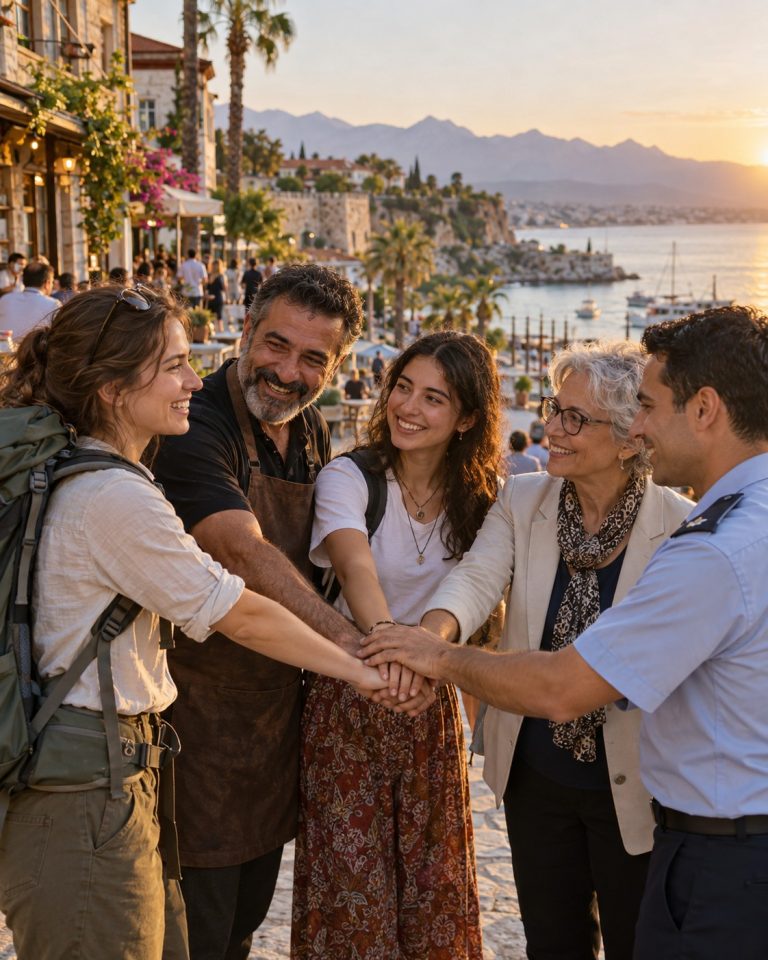
From travel planning to destination management, artificial intelligence is taking on a new role at every stage of tourism. Its value becomes clearest when travelers need reliable information and support in the moment.
September 29, 2026 | AURONXAI News
When travelers arrive in an unfamiliar city, they need more than directions to their hotel. They may also need transport information in their own language, trustworthy nearby businesses, current events, and a clear way to get help if something goes wrong. AI can bring this scattered information together around each traveler’s immediate needs.
The change begins before the journey. According to travel research company Phocuswright, nearly 40% of U.S. travelers used generative AI tools to plan trips in 2025, up 11 percentage points in one year. Although the figure covers the U.S. market, it illustrates a shift in how travelers discover destinations and compare their options.
From search results to personalized journeys
Traditionally, travelers research flights, accommodation, transport, and activities separately. An AI-powered assistant can consider these choices together in response to a request such as: “I have three days, I’m traveling with a child, and I’d like to avoid crowded places.”
A useful recommendation, however, needs more than a convincing answer. Opening hours, prices, accessibility details, and transport options must be up to date. The World Economic Forum’s 2026 tourism report highlights the growing importance of making destination information discoverable and reliable across AI-powered tools. As one example, Germany is bringing tourism information from different regions into a shared format that search and AI services can use.
Support for travelers, visibility for local businesses
AI’s role does not end when a trip is booked. During their stay, travelers can ask questions in their own language and discover nearby events, services, and businesses that meet their needs. This creates an opportunity for local businesses with limited advertising budgets: a café, pharmacy, or independent shop that provides accurate, current information can become visible to a visitor looking for exactly what it offers.
For destinations, the opportunity goes beyond attracting more visitors. Current information and relevant recommendations can help travelers explore different neighborhoods and spread tourism’s economic benefits more widely. The World Economic Forum points to the role technology can play in managing visitor concentration and strengthening tourism’s contribution to local communities.
Better guidance when plans go wrong
Some of the most important moments in a journey are unplanned: getting lost, facing a health concern, or trying to find reliable information during a disruption. AI can help identify a traveler’s request and route it to the right information or team more quickly. For that support to be dependable, information must be verified, emergency procedures must be clear, and human assistance must be available when needed.
AURONXAI’s approach to tourism brings these needs together. AURONX GOGO is designed to give travelers access to multilingual information, nearby places and benefits, events, and support points during their journey. AURONX NEURON provides a framework for organizations to assess incoming requests and incidents, direct them appropriately, and coordinate their response.
The future of tourism will depend on more than a single AI chat interface. It will depend on how accurately and effectively information connects travelers, local businesses, and destination managers. When AI strengthens those connections, travel becomes easier to navigate and more of a destination’s value becomes accessible to visitors.